Showing posts with label carbon sequestration. Show all posts

Friday, December 8, 2017

Carbon Credits and Tree Planting

by Dexter B. Dombro


Dexter Dombro (middle) is panelist at VCS event.
December caused something of a celebration at Amazonia Reforestation, as the agent for our plantation company successfully sold 46,000 carbon credits from our grouped certification under the Latin American Icontec standard to a Colombian oil company. While we have made voluntary carbon market sales before, this was the first one our La Pedregoza plantation has accomplished on a carbon exchange. Nevertheless, carbon markets and carbon offsets still have a long way to go to act as true incentives for tree planting.

Doing a VCS workshop with La
Pedregoza plantation workers

La Pedregoza has been certified under 2 different standards. The first is known as the Verified Carbon Standard or VCS. It is internationally recognized and follows a 2 year grouped certification process that was managed by the Fundacion Natura in Bogota, Colombia, involving 5 different tree plantations. The grouped approach significantly reduced certification costs, and happened simultaneously to the establishment of a carbon exchange on Colombia´s stock exchange, where the credits are now listed. Readers may wish to follow our Twitter account at @co2tropicaltree.


Labour policy posted at La Pedregoza.
All the participating plantations have their credits in a common purse, with sales divided between them, based on the percentage of hectares of trees managed by each plantation. La Pedregoza made the decision to participate in a second certification under the Latin American Icontec standard. That standard is the same as the one employed by VCS or by the Gold Standard, but is managed by a different organization. The decision to do both was in order to access different markets for the carbon credits produced by the trees at La Pedregoza. Obviously, we cannot sell the same credits twice under different schemes, so there is a separate protocol for managing that aspect.

More than 50% of a tropical tree's biomass is carbon.
Carbon certifications have 2 principal components. The first is good management, meaning compliance with all local labour laws, no child labour, technical training for workers, good environmental policies, conflict resolution policies, worker health and safety compliance and the like.  The second is more technical, evaluating the age of the plantations, that the cultivations are not in areas that previously had natural forest, and that measurement parcels are established to track growth and carbon sequestration by the trees in each lot.

Residual waste management and recycling
is one of the  certification issues.
At present the international price for a ton of carbon is very low, around $3.50 USD. At the same time, the cost of certification remains high. Costs include not just the initial certification, but also the ongoing audits and verifications required by each standard, with no guarantee that there will be a buyer. Colombia signed the Paris Climate Accord, which means the country will start to regulate its carbon emissions in 2021. This is good news, because it will allow carbon sequestration projects to have a more reliable market for the carbon credits they are producing. Companies that do not voluntarily offset their carbon footprint may find themselves paying a carbon tax, so there is incentive to support tree planting and carbon reduction strategies.

Measuring tree growth and carbon capture in
parcels is part of the certification process.
By way of criticism, the high cost of certification, and the large number of issues being certified, that do not pertain directly to carbon capture, make current mechanisms complicated and for many, unrealistic. There is a popular belief that carbon credits are some sort of bonanza for tree plantations, but in truth they are risky business with a lot of questionable extra costs that many can´t afford or will never recover, especially small producers. This means that tree planting has to rely on other means of income to be sustainable, as the sale of carbon credits is neither a reliable activity, nor a very lucrative one.

Every tree in a measurement parcel has a
unique tag for carbon capture tracking
To truly battle climate change, many countries may have to consider regulated carbon markets that are fair to producers, accessible by all, and that don’t rely on voluntary participation. Many of the standards now being employed are basically designed to make the certifier look like they are doing something. Some of the rules make little sense, for example cashew trees as cultivated in Vichada generally are no more than 5 meters high, but have thick trunks and large canopies; however they are not evaluated as trees, because somewhere there is a rule that a tree needs to be 5 meters tall, even if it looks like a bean pole. Nevertheless, La Pedregoza will continue to plant trees to help the planet, protecting soil, conserving biodiversity, fighting climate change, whether there is a carbon credit at the end of the rainbow or not.


© 2017 Plantación Amazonia el Vita S.A.S.


Sunday, December 15, 2013

Understanding Tropical Soils: Part 1


by Dexter B. Dombro


Tropical tree plantation in sandy acidic soil.
Tropical forests are the lungs of our planet. 95% of all tree-based carbon sequestration occurs in the tropics, primarily between both 15° northern and 15° southern latitudes from the equator. The huge forests of Canada, Russia and Scandinavia and other temperate zones only account for 5% of tree-based carbon capture. This means that the decline of tropical forests is a huge cause of climate change. Many studies show that tropical deforestation emits greenhouse gases (GHG) and may well be the leading cause of desertification of the Earth. All trees play important roles in removing CO2 from the atmosphere, but also other dangerous contaminants. They help hold ground water and thanks to the process of transpiration are crucial for cloud seeding and the maintenance of global rainfall patterns. Needless to say, forests also account for 90% of terrestrial biodiversity, making them essential habitats for life on our planet.

Imagine transpiration being like tree sweat.
However, planting trees, especially tropical trees, involves more than just sticking a seedling in the ground. Tropical soils are often poor and acidic, in large part due to millennia of torrential rains that have leached the nutrients and organic material out of the soul, a process called lixiviation. For example, the grasslands of eastern Colombia (llanos orientales) and Venezuela have soils that are mainly composed of sand, ferrous oxide gravels and some clay. Similar conditions exist in large parts of Brazil and in the Amazon basin. This is why Amazon deforestation is such a huge problem: poor people cut down trees to grow subsistence crops, collect one harvest and then find that the soil is depleted, so they repeat the process, cutting down more rainforest. Unfortunately, this is the definition of insanity, doing the same thing over and over again, expecting different results each time.

Tropical deforestation
I don’t want to bore you, but it is important to understand two key issues involving tropical soils. The first issue is acidity, measured in a logarithmic scale from 1 to 14, with a pH below 7 being acidic, while a pH over 7 is alkaline. Logarithmic means that each number on the scale is either 10 times more acidic or 10 times more alkaline than the previous number. A pH of 7 is considered neutral and is the value of pure water. Most plants do very well in neutral soils. However, the majority of tropical soils are acidic, which means that native trees and plants have had to adapt to acidic soil conditions. For example, the soil at La Pedregoza in the Orinoco River basin of Colombia has an average pH of 5.9, meaning it is 90 times more acidic than pure water. The traditional agricultural solution to soil acidity is to dump tons of lime on the soil, in order to achieve a more neutral pH, without regard to the cost or the damage done to micro-fauna.

Cation Exchange Capacity or CEC
The second issue is something called the cation exchange capacity or CEC of the soil. For simplicity’s sake this is best described as the capacity of the soil to retain nutrients, be that organic material, micro-fauna or fertilizers. CEC is measured on a scale of 0 to 50, with 0 being soil that has complete filtration or lixiviation of any nutrients, making for rapid drainage with no retention of any kind. In contrast, soil with a CEC of 50 is solid rock or hard clay, which does not allow for drainage, causing plants and their roots to drown. In the case of tropical soils the majority have a very low CEC. For example, the average effective CEC of soils at La Pedregoza is around 1, so pretty much total filtration of the soil with very little retention of nutrients, organic material or micro-fauna. This explains why rainforest trees are complete recyclers, drawing the majority of their requirements from the atmosphere and from the dead fall of leaves, branches and other organic matter inside the forest. They have very little dependence on the soil for their food requirements. Now you know why rainforest deforestation in the tropics produces such poor agricultural results.

Typical soil sample analysis from the Orinoco River basin. CIC is CEC in Spanish, while CICE means the  effective retention of the soil. Note the pH of the soil meaning it's very acidic in its natural state. Also note how poor the soil is in elements.
In Part 2 of this series of articles, I will address the most promising solution to the nutrient retention and acidity problem in tropical soils. That solution has positive implications for carbon sequestration, plant nutrition, enhanced agricultural and agroforestry production, is financially sustainable and has huge socio-economic development benefits in tropical regions. It is also 100% organic and natural, without any chemical or artificial elements.

Monday, May 2, 2011

10 Reasons Why Planting Tropical Trees is a Good Investment

1. For lumber.  Most people realize that if plantation wood is not available, then lumber will be cut from existing natural rain forest.  It is worth repeating that it is better to have one’s coffee table made out of plantation wood, and not out of old growth tropical forest. 

Acacia mangium plantation2. For profit. If afforestation and reforestation projects are not profitable, they are not  financially   sustainable. The fuzzy logic of many NGO’s on this issue is proven wrong by the reality on the ground. Humans need lumber resources for furniture, construction, boat building, farming, renewable energy and numerous other applications. Simply planting trees and then expecting them not to face the same problems forests have faced in the past is ridiculous. This means that profitable plantations can become the buffer that allows natural reserves and parks to protect biodiversity and natural forests. Profit is also boosted by demand, as humans give rabbits a run for procreativity. Don’t believe it? China now has more than 1.3 billion people, with India snapping at China’s heels, and with all of those people needing building materials, furniture, wood products, paper and fuel.

Native tree planting3. For biodiversity. Green companies like Amazonia Reforestation have programs to collect seeds and propagate native tree species that have been recklessly logged in the past. This is a challenging and expensive process, as there is often little information on germination, planting times, or even when or how to collect seeds. Propagation is challenged by the preference of many tropical trees to grow in social settings, in low-lying areas, or in areas subject to inundation. These factors make soil preparation, fertilization and forest management difficult. The founders of Amazonia Reforestation, members of the IUCN`s World Commission on Protected Areas, have created a natural reserve for this purpose, as an additional means of preserving biodiversity, and to inspire others to follow their lead.

Eucalyptus pellita plantation4. For expanded wildlife habitat. Many animals are niche specific. This means that if native tree species   are decimated, it has a direct impact on biodiversity and on the survival of many species of wildlife. By planting native tree species, responsible companies can expand wildlife habitat, while still providing lumber resources for human use. Amazonia Reforestation does this in both its natural reserve and in its plantation areas.

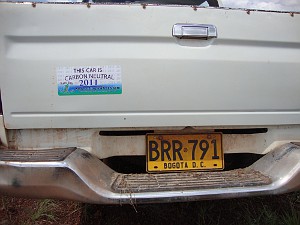
CO2 Tropical Trees sticker5. For carbon sequestration. It is scientific fact that tropical trees are very effective at carbon sequestration. Each fast growing tropical plantation tree sequesters as much as 50 lbs or 22.6 kg of carbon a year. Well over 50% of their woody biomass is carbon. Planting tropical trees is a major method of dealing with atmospheric carbon, which has gone from 350 ppm in 1985 to 393 ppm in April 2011 (Mauna Loa Observatory, Hawaii). CO2 Tropical Trees promotes that fast growing tropical trees are most effective at carbon sequestration within the first 10 years of their lives, a fact that jives well with human lumber requirements, leaving the carbon trapped in the wood for decades after harvest.

Fast growing Acacia mangium6. For cloud seeding. The natural process of transpiration by forests creates cloud in the atmosphere  that in turn bounces solar rays back into space, thereby cooling the Earth. Deforestation causes the opposite effect, including desertification of the planet and a hotter climate. An investment in tropical trees therefore offers up a double whammy against climate change and global warming thanks to cloud seeding and carbon capture.

Cashew in acidic soil7. For land reclamation. Many plantation species do well in infertile tropical soils, fixing nitrogen and depositing carbon in the soil, building up the soil so that after a harvest other more exotic and delicate species can be planted. Tropical tree planters like Amazonia Reforestation and CO2 Tropical Trees choose Acacia mangium, Azadirachta indica (Neem) and other legume family trees for nitrogen fixing, Eucalyptus pellita for water retention and wind breaks, Pinus caribaea, Caraipa llanorum (Saladillo) and Anacardium occidentale (cashew ) for acidic soils, to name a few. All of these tropical trees are planted with the long term goal of building up the soil, removing pollutants from the air, preventing erosion and allowing improved use of the soil in the future.

Tree planting boosts development8. For socio-economic development. Tropical trees provide local communities with more than just  some jobs in the lumber industry. They also allow for the creation of spin-off industries in developing countries, including apiculture, tannins and dyes, insecticides and fungicides, repellents and toxins, fruits and nuts, medicinal and naturopathic products, arts and crafts, foods and liquors, gums and adhesives, resins and varnishes, latex and oils, boat building and musical instruments, eco-tourism and adventure tourism, fuel and charcoal, animal fodder and protection, as well as agroforestry, permaculture and analog forestry opportunities. More people around the globe with disposable incomes helps to increase demand for tropical hardwoods.

Reserva Natural La Pedregoza9. For renewable energy. Many countries now require that power generation involve a significant percentage of alternative energy. Solar, wind and water energy are not always practical or available. That leaves biomass as an additional option. Biomass can be almost carbon neutral, as it only releases what it absorbed from the atmosphere in the first place, which is better than the steady addition of atmospheric CO2 caused by hydrocarbons like petroleum and coal. Many fast growing plantation species have high calorific values, which when compressed into wood pellets and similar products can rival coal for kcal (kilocalorie) output.


10. For afforestation and reforestation. At present, people worldwide are only planting 10% of the trees we are harvesting, burning or removing on an annual basis. This is clearly not sustainable, as evidenced by climate change, desertification and loss of biodiversity. This in turn has a direct impact on the human spirit, on our health and on the survival of our planet. Green investors plant trees for a better world and because it is low risk but high return.

Tuesday, October 26, 2010

Why Plant Tropical Trees?

Afforestation Plantation in Vichada, Colombia
Many people have probably never given much thought to why one would plant tropical trees, or any tree for that matter. A recent blog comment asked “Why plant trees? Is it just for carbon sequestration?” Before answering, it seems like a good idea to point out that this blog is about tropical trees for a reason. Their amazing diversity and therefore their wonderful and numerous uses not only answer the question with an endless list, but once again emphasize why tropical trees are such a profitable green investment. This article is a summary of some of the 25 principle reasons for planting and using tropical trees, with no effort being made to distinguish between plantation and native tree species. No doubt many other uses and reasons exist. Let’s review the 25 most common reasons.
1. Lumber: Tropical trees are an important source of the world’s hardwood supply. Hardwood trees are used in everything from fine furniture to building materials and from pulp and paper to renewable energy and firewood. World demand for tropical hardwood increases year after year. We plant tropical trees because it is better to have our coffee tables made with plantation wood, as opposed to natural rain forest wood.

Fast growing Acacia mangium at 3 years
2. Construction: It may seem strange to separate this from the general description of lumber, but people plant tropical trees for a range of applications, from flooring to cement boards, from plywood to roofing materials. Ironwood species like Congrio (Acosmium nitens) are used for utility and telephone poles, railway ties and heavy construction. Some of these hardwoods can be left untreated in the ground for decades without suffering from insect, fungus or moisture damage.

3. Musical Instruments: Many of our favourite musical instruments would not sound the same if we didn’t have tropical trees planted to provide the exotic woods used in their manufacture. Have you ever given thanks for ebony (Diospyros dendro and ebenum) piano keys or purpleheart (Peltogyne purpurea) guitar frets, or Brazilian Biriba wood (Rollinia mucosa) for berimbau sticks and Jacaranda wood (Jacaranda brasiliana) for atabaque drums?

Eucalyptus pellita plantation with your blogger
4. Boat Building: Tropical trees have been essential for boat and ship building since before recorded history. Numerous species are excellent for their durability in water, their flexibility when being bent to shape a hull, or for their properties as canoes or dugouts. Teak is a well know ship and yacht building wood in Asia, but consider that where Amazonia Reforestation plants tropical trees in the Orinoco River basin there are 14 acknowledged boat building species, like Algarrobo (Hymenaea courbaril), Ceiba (Ceiba pentandra) and Sassafras (Ocotea cymbarum).

5. Carbon Sequestration: Tropical trees are the most efficient trees on the planet at removing CO2 from the atmosphere, especially in the first 10 years of their lives. CO2 isn’t just absorbed into their woody biomass, but is also deposited into the soil along their roots and due to deadfall around the tree. The average tropical tree planted by CO2 Tropical Trees sequesters as much as 50 lbs or 22.6 kg of carbon a year, compared to the best boreal tree at 2.2lbs or 1 kg a year.

6. Medicine: Some 7,000 commercial medicines currently in everyday use are based on tropical trees and the flora that depends on them. Science and researchers have barely scratched the surface, with new compounds and new cures originating from the rain forest all the time. Many indigenous people and naturopathic medicines like Ayurveda place great reliance on tropical trees for cures and treatments. Planting beneficial species is a no-brainer. At the Reserva Natural La Pedregoza in the Orinoco River basin they have 73 tropical tree species with known medicial properties.

7. Land Reclamation: A large number of tropical trees have proven themselves ideal for reclaiming old mine sites, for preventing erosion and landslides, or for stopping desertification. The trees rebuild top soil destroyed by mining or that was lost due to extreme erosion. Many tropical trees are good at nitrogen-fixing in the soil. Some of those same trees are able to absorb pollutants other than carbon from the atmosphere and from the soil, such as heavy metals like lead and mercury. Acacia mangium has a proud history of being planted for land reclamation purposes.

Tropical tree planted in ferrous-oxide rocks
8. Soil Improvement: Some tropical trees can be planted to improve soils that are otherwise infertile, thanks to the ability of leguminous tropical trees to fix nitrogen and carbon in the soil. Many areas that have suffered from bad deforestation or mining in the past can be made productive again using careful species selection and permaculture or analog forestry processes. Better soil allows for a wider variety of tree species to be planted in future cultivation cycles. At Amazonia Reforestation Acacia mangium is planted for its recognized nitrogen-fixing capacity.

9. Infertile Soils: It may seem ironic, but many rain forests are perfect recyclers, and therefore do not need to rely on the soil. They get their energy from the air, the sun and their own deadfall. This means that many tropical tree species can be planted in rocks or sand, and with a little help can start a forest in what might otherwise seem like hopeless locations and conditions.

Tropical tree planted in infertile sand
10. Wind Breaks: Fast growing tropical trees can be planted to prevent erosion or crop damage due to wind. Tropical trees set deep roots, so they can be very effective quickly. Eucalyptus pellita and other Eucalypts are often used to establish rapid wind breaks.

11. Fire Breaks: Numerous tropical tree species can act as a natural fire break. Due to the canopy effect there is little under growth that can burn, and because of the nature of hardwood trees areas planted with tropical trees are hard to ignite. Savanna wild fires will often peter out and die when they hit areas planted with tropical trees, while damage due to lighting strikes will be confined to one or two tropical trees hit directly inside a planted area. Two examples are Saladillo Rojo (Caraipa llanorum) or Moriche palms (Mauritia flexuosa).

Congrio happily growing in flood water
12. Flood Resistant: People are often not sure what to do with low lying areas prone to flooding. Lots of tropical trees species will happily grow in very moist or flood conditions. Riparian and inundation forest species can survive in flood conditions for months on end. This means low lying areas can be productive for lumber, fruits or wildlife habitat once planted with appropriate tropical tree species. In the Orinoco River basin species like Congrio (Acosmium nitens), Saladillo Rojo (Caraipa llanorum), Saladillo Blanco (Vochysia lehmanii), Sassafras (Ocotea cymbarum) and many others thrive in very wet or flooded soils.

Wildlife and biodiversity depend on tropical trees
13. Wildlife: Tropical trees expand endangered wildlife habitat, providing food and shelter. This is especially true when native trees are planted, as many fauna species are niche dependent. Tropical trees are an important element in the conservation of biodiversity and the preservation of our natural world. Tropical rain forests are the most bio-diverse land areas on the planet.

14. Fruits and Seeds: Tropical trees bear an astonishing variety of fruits and seeds that feed humans, birds and animals. This variety includes species that do well in wet conditions, dry conditions, and at various elevations, or in conditions where soils are acidic or saline. The trees become an important element in local socio-economic development. A typical example would be Amazona Reforestation, where they plant mango, cashew, tamarind, lemon, merecure, almond and other fruit and nut trees for both human and wildlife use.

15. Water: Planting tropical trees helps hold ground water by preventing runoff and erosion thanks to their root systems. Holding ground water occurs even in places where the soil is porous and where water would otherwise drain away or sink out of sight. Perhaps even more importantly, trees are able to clean contaminated ground and runoff water by removing pollutants, solvents and fuels from the ground water.

Fruits of tropical trees feed humans and wildlife
16. Transpiration: Transpiration is similar to evaporation, but involves the sweating or release of water by plants. Tropical trees actively seed clouds thanks to the transpiration process. The clouds then reflect sunlight away from the Earth, cooling the planet. Transpiration is responsible for climate cycles relied upon by farmers to grow crops, making civilization possible. This is not just a local effect; for instance, the Amazon rain forest determines weather patterns as far north as Texas. Planting tropical trees for transpiration is another element in the struggle against climate change and for a cooler planet.

17. Cooling: Tropical trees cool our planet by 0.7º C per annum thanks to their canopy effect. The more rain forests we cut down, the hotter the planet becomes. This may be among the most important reasons to plant tropical trees.

18. Sap Products: Tropical tree saps supply raw materials for many valuable products, such as the latex from the rubber tree (Hevea brasiliensis) for products ranging from tires to condoms. Tropical tree saps are also used to make syrups, tonics, beers, liquors, sugars and medicines. A large number of tropical trees yield glues and pigments, as well as organic poisons used by indigenous peoples for hunting and fishing.

Flowers of Acacia mangium trees make great honey
19. Honey: Tropical trees have flowers and extra-floral phylode stems that produce nectar for honey production. Some species, like Acacia mangium, can produce as much as 100 kg of honey per hectare of trees per year. This makes planting tropical trees important for local socio-economic development programs.

20. Air: Tropical trees sequester carbon and release oxygen, so that we can all breath. The more trees we plant, the better the air quality. The Orinoco River and the Amazon River basins are considered the green lungs of our planet because of the oxygen they release into the atmosphere.

21. Shade: Tropical trees provide shade for humans, cattle and others in extremely hot climates, like for example the majestic Guanacaste trees (Enterolobium cyclocarpum) of Costa Rica. This type of shade is also important for numerous crops beneficial to humans. Farmers will deliberately plant leguminous tropical trees for shade and nitrogen fixing in permaculture and analog forestry settings, such as Erythrina spp. trees to shield coffee shrubs for better production rates.

Cashew tree seedlings waiting to be planted
22. Other Products: The wood, bark and fruits of many tropical trees provide soaps and detergents, insect repellents and specialty oils like safrole, almond and eucalyptus oils. Some species, like Yopo (Anadenanthera peregrina) have hallucinogenic properties important to indigenous peoples. Yet others produce tannins and dyes used by industry or used in folkloric and artisan manufacture, while yet others provide fibres for ropes and linens.

23. Oil: Some tropical trees are planted because they have oil fruits suitable for human consumption as cooking oils. Yet others are planted because they have oil fruits that are ideal for the production of bio-diesel and other fuels. Jatropha curcas is reputed to yield 1.6 metric tons of oil for bio-diesel per hectare planted, while African oil palms (Elaeis oleifera) may yield over 3 metric tons per hectare per year, making these tropical trees important renewable energy sources.

24. Renewable Energy: Planting many species of tropical trees makes sense, because they are fast growing and offer an excellent renewable energy source. The woods of numerous tropical trees like Acacia mangium and Eucalyptus pellita have high calorific values that boost heat and power production, or that can be used in low-tech applications like charcoal. Tropical trees are also a very important source of bio-diesels for renewable energy purposes.

Merecure tree and fruits feed people and wildlife
25. Development: Tropical trees are an essential element in socio-economic development programs using permaculture or analog forestry practices to assist developing countries to become emerging green economies. It should be stressed that planting tropical trees yields multiple results with just one species. While some tropical trees do indeed seem to grow “slowly”, virtually all tropical trees outperform the growth rates of boreal and temperate zone trees. For instance, the plantation woods planted by Amazonia Reforestation go from seedling to mature harvestable tree in just 10 year’s time, while an equivalent boreal tree would take from between 80 to 120 years to produce similar results as a softwood tree. This amazing diversity means that developing countries can benefit more from planting and maintaining their tropical rain forests and tropical tree plantations, than they ever could from deforestation for subsistence agricultural purposes.